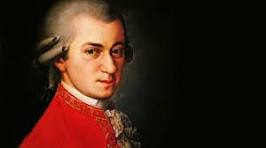
Happy Birthday Mozart January 27, 1756 - December 5, 1791
Mozart – Composer and Techie
What do Mozart and I have in common? At first blush, you might suggest, “Both of you like Mozart’s music,” not adding that, “and it ends there.” Close, but there is common ground.
The answer is that ...
Mozart and I are both “techies.” It all began in 1698. After hundreds of attempts by dozens of craftsmen, the Italian instrument maker Bartolomeo Cristofori* finally solved all the problems inherent in making a harpsichord with hammers, the Piano Forte. While it is unimportant just what the problems were, the result was the creation of a new instrument with a dynamic range that completely eclipsed the harpsichord. The new sound excited the public; the powerful and rich Medici listed one of Christofori’s instruments in a 1700 inventory of instruments. Here was a powerful new tool, hardly touched by new composition. Techniques and rules of composition for it did not exist. The first explorers with the new technology, which included Mozart, would have a great impact.
In the beginning, the piano could not be mass-produced, because the technology was too complex. This would take several more decades. The piano, therefore, was a rather experimental and expensive technology. By the time Mozart (1757 – 1791) was a youngster, these problems had been solved. Pianos were available inexpensively; Mozart had access. And as we know Mozart composed hundreds of works for this new instrument - the hi-tech piano. Joseph Hayden (1732 – 1809) began his career composing for the harpsichord and ended it composing for the piano. So important was this new instrument that the greatest composers, including no less than Ludwig von Beethoven (1770 – 1827), wrote extensively for it. From our vantage point of history, we may find it difficult to believe that throughout the 18th century the Piano was more or less an experimental and high-tech instrument. Eventually, it surpassed the violin as the instrument of choice for soloists.
This story sounds familiar? In the normal course of events, the new technology displaces the old; the new idea supplants the old; the new device replaces the old. It may not even be the case that the old is bad or does not function. In time, the old passes in favor of the new.
This is the case before us - in education. With qualified and capable teachers in ever-greater demand, and without the resources to stimulate greater production, institutions are turning to a less-and-less expensive but effective alternative: technology-enhanced learning. Call it what you will, distance education, Web-assisted instruction, online learning, or computer-based training (CBT), the technology, the idea, the device all wrapped in one is here to stay. Like an unwanted visitor, it will not go away.
Make no mistake; if the resources were available the best way to teach the young is by face-to-face tutorials given by gifted and talented teachers. This system produced Isaac Newton, Plato, and Archimedes. However, our modern institutions and our contemporary priorities deny this for several reasons we all know. The least among them are the many lucrative paths offered to these same people.
So, what is better: uncertified and unqualified teachers porting knowledge as best they can or a hi-tech and online alternative? This past year of COVID has offered strong clues.
*By 1711 the instrument was detailed in the Venetian Giornale de' letterati d'Italia by Scipione Maffei who referred to Cristofori's invention the gravicembalo col piano e forte ("harpsichord with soft and loud"). Names change; ideas survive.
Comments
Post a Comment
Please Comment.